
Research Dossier & Multiphysics Modeling
Pioneering 3D coupled numerical formulations for electrified EV motor bearings, thermal elastohydrodynamic lubrication (TEHL), and non-linear rough contact nanoindentation.
Electrified Tribology, TEHL & Contact Mechanics
Pioneering 3D multiphysics solvers for electric vehicle motor bearings, electrostatic discharge mitigation, and non-linear rough surface nanoindentation.
Transient Film Breakdown & Current Conduction in EV Bearings
Transient Mixed-EHL Solvers & Dielectric Breakdown in EV Motor Bearings
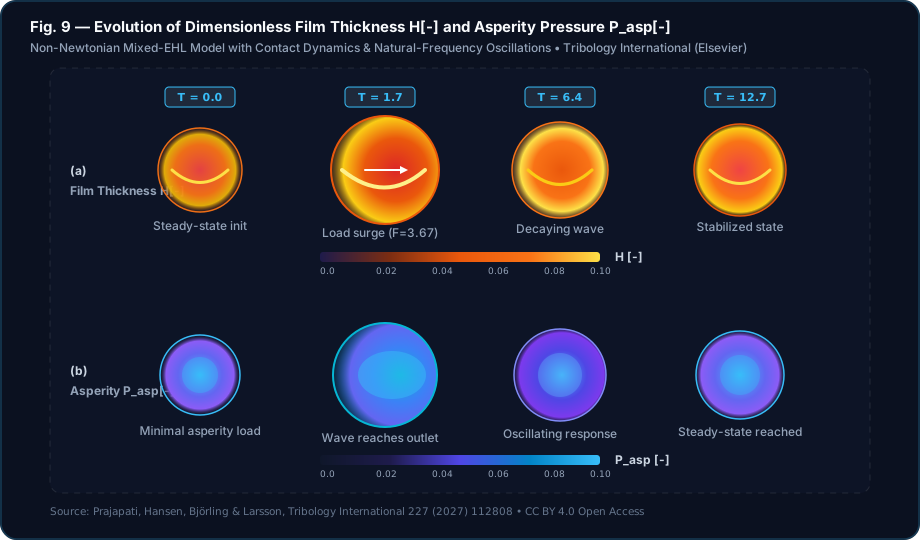
Fig. 9 • Dynamic Wave Propagation & Asperity Pressure
2D contour evolution (T = 0.0 → 12.7) capturing the entrapped lubricant wave and contact footprint expansion under sudden load increases (F = 3.67).
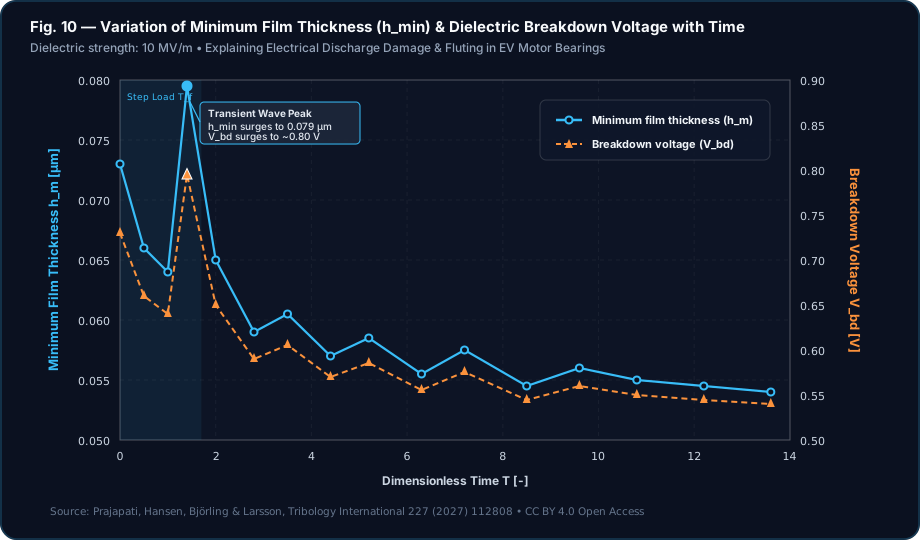
Fig. 10 • Minimum Film Thickness & Breakdown Voltage
Direct numerical proof that transient natural-frequency oscillations cause lubricant film thinning (hmin ≈ 0.054 μm), dropping breakdown voltage below 0.55 V and triggering bearing fluting.
Electrified Tribology & EV Bearings
High-Frequency Bearing Currents & Film Breakdown in Electric Vehicle PowertrainsElectric vehicle motor bearings operate under harsh high-speed conditions coupled with severe inverter-induced voltage pulses (PWM). Deepak Prajapati pioneered 3D numerical models and experimental methodologies using MTM-EC to simulate and prevent current-induced dielectric breakdown, electrical discharge machining (EDM) pitting, and white etching cracks (WEC).
Core Scientific Aspects & Methodologies:
Simulating sub-microsecond voltage surges across elastohydrodynamic lubricant films to predict threshold dielectric breakdown and spark discharge damage.
Executing controlled electrical contact resistance and traction tests to quantify contact area conductivity and electrical current transmission under rolling-sliding motion.
Formulating design guidelines and lubricant formulations that resist electrical erosion in next-generation high-RPM EV drivetrains.
TEHL & Mixed-EHL Solvers
3D Transient Non-Newtonian Multiphysics Solvers for Counterformal ContactsFormulating rigorous full-system finite difference and FEA solvers for Thermo-Elastohydrodynamic Lubrication (TEHL) and Mixed-EHL. The models solve coupled Reynolds, non-Newtonian lubricant rheology, energy, elasticity, and micro-asperity contact equations for gears, cam-followers, and rolling element bearings subjected to severe contact pressures (>2 GPa).
Core Scientific Aspects & Methodologies:
Solving generalized Reynolds equations coupled with Carreau-Yasuda and Eyring shear-thinning rheology under severe sliding velocities and shear rates.
Quantifying how deterministic surface micro-texturing, non-Gaussian roughness skewness, and spectral properties control film thickness and asperity contact ratio.
3D energy equation solutions resolving local thermal gradients across the lubricant film thickness, predicting thermal traction and film collapse risk.
Water-Based & Eco-Friendly Lubricants
Decarbonizing Heavy Machinery with Sustainable, Low-Viscosity Aqueous MediaTransitioning from mineral-oil-based lubricants to sustainable, biodegradable water-based formulations is vital for green industry and ocean-marine systems. Prajapati investigates the fluid mechanics and surface interactions of water-lubricated journal bearings and piston ring/liner conjunctions, accounting for low hydrodynamic viscosity and non-Gaussian surface roughness.
Core Scientific Aspects & Methodologies:
Analyzing the delicate balance between low-viscosity aqueous fluid film generation and micro-asperity solid-to-solid contact.
Incorporating mass-conserving Elrod-Adams cavitation algorithms to model vapor bubble formation and collapse in high-speed reciprocating contacts.
Guiding the design of zero-emission propulsion shaft bearings and environmentally benign hydro-power mechanical components.
Rough Surface Nanoindentation & FEA
Multiphysics Continuum Mechanics of Titanium Alloys (Ti6Al4V) at UPHF FranceReal engineering surfaces are fundamentally rough at the micro- and nano-scale. At Université Polytechnique Hauts-de-France (LAMIH CNRS), Prajapati develops advanced non-linear finite element models in Abaqus that import true 3D surface metrology to simulate nanoindentation on Ti6Al4V aerospace alloy, revealing localized elastoplastic stress fields and contact hardness.
Core Scientific Aspects & Methodologies:
Writing specialized Python pipelines that convert raw optical profilometer point-clouds into high-fidelity Abaqus geometry and contact mesh interfaces.
Capturing work-hardening, pile-up/sink-in phenomena, and localized micro-shear banding under sharp indenter geometries.
Correlating experimental Berkovich indentation curves with continuum finite element simulations to isolate true intrinsic material properties from roughness artifacts.
AI & Machine Learning in Tribology
Surrogate Neural Networks for Real-Time Friction & Contact Area PredictionConventional numerical solutions of multi-scale mixed lubrication require hours of supercomputing cluster time. Prajapati harnesses Artificial Neural Networks (ANN), Deep Learning, and ensemble regression trained on verified physical solvers and experimental rigs to predict friction coefficients, real contact areas, and lubrication regimes instantaneously.
Core Scientific Aspects & Methodologies:
Classifying boundary, mixed, and hydrodynamic regimes in milliseconds based on operating parameters (speed, load, viscosity, topography).
Predicting macroscopic coefficient of friction (COF) across wide temperature and load envelopes with <3% relative error versus experimental measurements.
Embedding physical contact constraints within neural architectures to guarantee physically consistent predictions outside the training dataset.
Explore Corroborating Peer-Reviewed Output
Review 25+ SCI journal publications validating these mathematical and experimental findings.